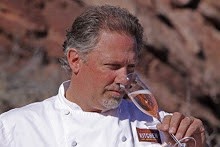
Friday, May 25, 2012

Boulder to Wisconsin to NYC

Boulder


It has been a whirlwind... Boulder Country Dinner on the 12th of May. Very satisfied with the turnout - guests from Boulder, Parker, Denver, Fort Collins and Niwot. Eight great culinary students from Johnson & Wales assisting in the kitchen and for service. My friend, Sommelier Jesse Slaughter handled the initial wine/food pairings and the wine service with grace and aplomb. Drew from Centennial Liquors in Louisville sourced great wines to be pared with the menu... That is one of the aspects of the Need to Feed. I NEED to FEED not only my guests a wonderful menu but provide the atmosphere for convivality and sharing. The Slow Food movement was my inspiration and and it also FEEDS my soul. We FEED people in a spiritual, visceral and soulful manner. I give the same aspects to myself and, hopefully, the staff which allows me the ability to FEED. It is parts of the whole...
Denver
The last weeks of instruction at the University culminated with graduation ceremonies, in the rain, on the 19th of May. I was struck by the students that crossed the stage. many of us have made the same treck, walked in those paths only to discover our own journey. What will be there path? How will they make their way in the world? Who will they become? Emily Abens, student speaker, found her voice when she spoke of 'Moments of Impact', quoting the contemporary movie 'The Vow'. We, as instructors and educators make an IMPACT when we IMPACT with students. We hope that what we say, do and teach will be IMPACTFUL. I write this just 6 days sfter the ceremonies and I have already been impacted by my recent travels. I departed the day after graduation for the fields and rolling hills of the upper Midwest to be IMPACTED by farmers, cheese makers and fellow culinarians. Thank you, Enily, for provided an IMPACTFUL observation...
Wisconsin
I arrived in Wisconsin on Sunday, 20 May 2012. Warm sunshine with cool breezes greeted me and 11 other Chefs, Sommeliers and Culinary Educators. We were given the opportunity by the Wisconsin Milk Marketing Board to tour the Wisconsin country side and meet Master Cheese Makers, Farmers, Artisans, Retail Cheese Purveyors, Research Chefs and Food Service professionals who all had one thing in common. The Need to Feed. In this manner is is the flow of milk from the family or industrial farm, be it cow, sheep or goat milks. The dairy industry and their milk is the raw product for cheese production.  Cheee is easy to make but it is, as I learned, far from simple. Milk, cultures, bacteria, rennet, flavors and salt. Just a few ingredients in cheese. The results are thousands of cheeses. The difference is the focus of the cheese maker. Decisions are made to use raw or pasteurized or heat-modified milk and then to create a cheese in a style –soft, semi-soft, firm and hard. Cheddar, Bleu, Gruyere or Chevre – the process is essentially the same. The results, as we tasted and observed, blew me away... It is evident that these stewards of the land and crafters of cheese are some of the most creative and passionate people I have met in 38 years in food service.

Their names are less familiar to me and, perhaps, completely foreign to you. The following are people and places that are worth looking in to. They are, in order of visitation and tastings: Bruce Workman @ Edelweiss Creamery, Myron Olson @ Chalet Cheese, Regi Hise and Angie Frie @ Emmi Roth USA, Stauffacher Dairy, Chris & Kris Roelli @ Roelli Cheese, Sid Cook @ Carr Valley Cheese, Bob Wills @ Cedar Grove Cheese, Dean Sommer @ Wisconsin Center for Dairy Research, Tony Hook @ Hook's Cheese and finally, but certainly not least, Willi Lahner @ Bleu Mont Dairy. These are rock stars in the world of Artisan & Master Cheese Makers. Trained by generations of American cheese makers or apprenticed in Europe to the thousand-year experience of monks, farmsteads and artisans. Add to that some rockin' scientific understanding of what cheese ‘is’ and ‘isn’t’ and we who attended the three-days in Wisconsin have a greater understanding and appreciation of cheese and cheese production and humanity. My great thanks to Sara ill from the Wisconsin Milk Marketing Board and to Mary Petersen from Cafe for the organization and support which allowed us an inside view to the generational culture that is Cheese making in Wisconsin. Bravo.

Between the formal tastings, lunches and dinners (one of them a most memorable meal with James Beard Awarded Tory Miller, Chef @ L’Etoile in Madison, WI) I tasted well over 100 cheeses in two days, some remarkable and some purely ethereal and heavenly. As a chef, these food products are the end result of a long line of passionately dedicated people who care and trust in each other. The purest of milk can potentially make the greatest cheese. Poor quality milk will never make more than poor quality cheese… The lesson is to use the best quality products available, treat them and the people offering these to you with respect, apply sound methods and techniques and let your creativity and imagination lead the way to producing something in ‘your style’.

NYC
Rain. Humidity. Crowds. Buildings. Noise. I write these words in a Hindu inspired Bed& Breakfast in the Lower East Side of Manhattan as I prepare for Day 1 of my stage at WD~50 on Clinton Street, just 1 ½ blocks from this apartment. I walked the neighborhood this morning to get a feel for where I am…
First, I shopped at the corner Carniceria y Fruiteria. The Pueblo Deli & Grocery. Bottled water, fruit and nectar of the gods - coffee. As I walk, I can’t think of two more diverse environments than the rolling hills and farms of South Western Wisconsin, populated by immigrant families from Ireland, Scandinavia and Eastern Europe, and the bustling, cab-honking, grey-skied environs of the Lower East Side of Manhattan – the East Village – in one of the oldest cities in the Eastern United States, full of representative citizens from every country in the world.

I walked the short route to Michelin-starred WD~50. My block and one-half stroll reminded me of the Hotel Brick in the Roma-Norte section of Mexico City DF. The corner of Tabasco y Obregon, looks, smells and feels the same as the corner of Stanton & Attorney. The streets and playgrounds are crowded with intermittent gardens and piles of plastic bags holding refuse and garbage from yesterday and longer. The language of the street is Hispanic. I was immediately struck by the location. Real Estate dogma be damned. This temple of haute-gastronomy is a storefront between less enticing business opportunities, at least for me.

The skies have just opened up – overhead lightning, just yards away and the resultant torrent of rain crashes to the ground. It is a rainy day in Manhattan. The world outside goes about it’s business and I drink coffee, tap away at the keyboard and look both forward to‘Gastronomic Disneyland’ and backward to a time of peaceful pastures, communal fellowship, placid fields, wine, cheese, bread and – well, enough of those memories, for now. They are burned into my psyche, like photographs from friends that live on into the years.
I feel like I want to share my words and my experiences quickly, yet I know that the more I hermit myself, the better the experience will be for all. The passive nature of this B&B is perfectly attuned to my goal. Immersion, once again in a gastronomic temple (one of many this summer) and the resultant epiphanal qualities of my work will radiate. I prepare myself for my first 13-hour shift; the menial yet important tasks of ironing my chef coat, arranging my knife kit, checking for notebooks, sharpie, pen, baker’s cap, etc. As I wash the dust from my clogs I see these same shoes walking through the pastures and cow barns of the Mid-West, through cheese houses and freshly cleaned production spaces… Thus, I am reminded of doing the same preparatory tasks as a young cook and culinary student and of my day to day mise en place as a Chef and Chef/Instructor, and fittingly to my day today, as a stagiaire @ The French Laundry in 2009…some things never change, not matter how different they seem. Never stop learning. Never stop living. Never stop.

The trepidation of new surroundings are tempered with the fascination of the subject at hand. Wylie Dufresne - Rhode Island native and modernist Chef is my first stop in the summer of 2012's apprenticeship. I must thank Chris Young, from Modernbist Cuisine for helping to set this stage and to the many people at Johnson & Wa;les who have allowed these experiences not be a financila burden...

I believe that the basic premise of restaurant food should have a tradition, a foundation - which makes it satisfying and 'appropriate'. Convention, copying and cooking quips are just masking a lack of culinary history and a mis-understanding of what it means to be a Chef - in my opinion. We, as culinary educators, need to know about and demonstrate all that is happening in the culinary world, however... From that, you and I must keep learning, keep teaching and keep our eyes and ears open... Another aspect of the NEED to FEED. Peace.
~R

Wednesday, May 9, 2012

The Boulder Country Dinner, Vol.2, Part 1

At last, 20 guests.  Date is set.  Weather is 'iffy' - won't matter as we will dine in the Great Room...  Wine pairings have been made.  Staff is excited.  I like the menu, the pairings, and everything else!  Next Boulder Country Dinner - 21June 2012.  By then I will be back from WD~50, Daniel and Le Bernardin.  Wonder what'll be cooking...  Stay in touch because I want to see y'all in the country!!!

  In the Country – 12 May 2012

‘Champagne & Canapé, on-the-Rocks’ (6:00 p.m.)


1st Course - Amuse Me - ‘Trois Foie’ (6:35 p.m.)

Torchon / Apples / Seared / Pickled Mushrooms / Brioche / Butter / Salt
Viognier

2nd Course – ‘Granny’ (6:50 p.m.)
Porridge / Split Peas / Ham Hock / Mirepoix / Pea Butter / Crouton / Quail Egg / Pea Tendrils
Albarino

3rd Course – ‘Fruits de Mer’ (7:05 p.m.)
Butter-Poached Lobster / Sole / Scallop / Lovage Beurre Blanc
Roasted Asparagus Shallot Salad / Leek Hay / Potato Mille Feuille
Sparkling Rose

4th Course – ‘Spring Lamb’ (7:20 p.m.)
Parsley Crust / Roasted Cauliflower / Spring Lettuce / Triple-Fried Potatoes
Mushroom Medley / Lamb Kidney / Chutney
Cabernet Sauvignon

5th Course – ‘My Friend, The Pig’ (7:35 p.m.)
Mulefoot / Spinach / Acorns & Walnuts / Fried Onions / Sweet Potato / Morita Sauce
Tempranillo

6th Course – ‘My Other Friend, The Goat’ (7:50 p.m.)
 Chevre / Orbs / Carnitas / Chive / Honeycomb / Radish & Arugula / Vinaigrette
Garnacha

7th Course – ‘Bocadillo’ (8:05 p.m.)
Rhubarb / Gastrique / Gel  / Yogurt Sorbet / Salted Caramel / Hazelnut Chocolate Cookie
Frangelico & Sheep’s Milk Foam w/ Salted-Candied Rhubarb & Caramel Drizzle

Espresso Tasting (8:15 p.m.)
Sugar Cubes
Peace.

~R

Wednesday, May 2, 2012

Copycat Chefs...

Read a great article in 'Lucky Peach' (http://www.momofuku.com/news-and-events/lucky-peach/) this afternoon...  Here's the scenario. 

I am teaching a class @ JWU titled 'American Cuisine Today'.  The students have been exposed to regional American foods and particular Chefs and Michelin-starred restaurants in order to elevate their understanding of fine cuisine.  So....today the particular group creating, cooking and presenting a representative cuisine of the NorthEast USA is designing food inspired by David Chang of Momofuko and Wylie Dufresne of WD~50.  The article in 'Lucky Peach' is written about Chef Chang and three other Chefs having lunch in San Francisco, presumably on a cold, SF bay-swept pier.  The gist is the lunching chefs are pondering the problems and issues of chefs that copy other chefs without giving the initial chefs the public accord...all the while I am reading this and my students are 'copying' Chefs Chang and Dufresne!!!  Ironic, eh?

Culinary students are, like singers and muscians, trying to find their 'voice' and looking for their 'style' - all the while emulating others who have come before them.  Chefs Chang and Dufresne...we acknowledge your brilliance and we honor you as we have duplicated your food and created our own dishes with you as subject matter, mentors and inspiration...  Bravo.

A word to the student chef.  Find who you are.  Cook what you love.  Be what you dream.  In the end, as with all crafts and arts, we delve to make our guests happy...  Peace.

~R

Sunday, April 29, 2012

Ecclesiastes 3:1

From the passing of Queen Elizabeth I of England in 1603, the Bible was rewritten by a league of scholars and learned men in England of the early 17th century.  It was created in order to become a work 'for the common people'.  In 1611 it debuted as the King James Bible evoking great literary and heavenly passion through the subsequent years.  From it's pages have come a litany of phrases that we use everyday, at least in the English language.  Having been vastly used and copied they and are now in our every day jargon.  The most used and quoted phrase is from Ezekiel 4:10, 'From time to time'. 

The one which reasonates to me and is, in part, the tell tale for things agricultural and cooking is from Ecclesiastes 3:1, 'To every thing there is a season'.  If you stop to let those seven words come full circle in your mind you can understand it's power.  The small, the grandiose, the subtle, the vague and the immaculate are all seasonal.  The Edelweiss which grows in Austrian and Swiss alpine meadows has a season in which it blooms and grows....the raging torrents of the Colorado River, gouging and scarring the walls of the Grand Canyon, had a season until the Glen Canyon Dam halted it's seasonal fury in 1964....the furled fern fronds that peek their crooked necks out of the ground in March and April in New England have their seasonality as they grow into a complete fern soon after their early springtime arrival....The Winter of our Discontent is John Steinbeck's last novel (written and published in 1961, which is a story of fortune lost and a life forlorn) and the title is a reference to the first two lines of William Shakespeare's Richard III, Act I, Scene 1-

'Now is the winter of our discontent
Made glorious summer by this sun/son of York'.

Most obvious are the four seasons of the year that drive our climate and relegate us to riders on the blue planet, necessitating our adaptive natures.  They are what we notably confront everyday when we wake and set ourselves to our daily tasks.  Rainy April mornings and blustry October afternoons are interrupted, thankfully by sun-ripened summer days.  Our northern-latitude calender year ends and begins with the snowy and bitter cold of December and January.  Farmers live within and because of the seasons.  Roaming herds of Lapland Reindeer and East African Wildebeests live, eat and die within the confines of the geographic seasons.  Anandromous and Catadromous fish are born to migrate and eventually, like the Pacific Chinook, Coho and Sockeye Salmon, miraculously return to their birthplace to spawn and die - all within their own seasonality.  We have likened our own human existence to the Spring of young life, the Summer of love and possibilities, the Autumn of marriage and our life work to the Winter of old age and death...

I have always maintained that there are 12 seasons.  I am not a farmer but, as a cook and chef, I wish to use the abundant seasonality of spring, summer, autumn and winter bounty.  Hence, my company's name is 12Seasons...  All these seasonal events help to tie us together for what we are.  We are the human animal, and how we have adapted to the far ranging seasonal elements on the earth has helped to define us culturally, socially, politically, spirtually and, at last, gastronomically...  We are what we eat and what we eat, eats - and when, depending on the season, we may or can or SHOULD eat what we have sown and reaped.  My hope is that we can somehow, and I do not have the answer to this question - only the question, find the way, in any season, to continue to partake of the bounty of what the earth brings forth.  The seaons are more powerful than us.  When we try to circumvent the seaonality of food, we get dangerous results.  We must learn to live in the harmony of all seasons.  Peace.


'Adopt the pace of nature.  Her secret is patience.'  - Ralph Waldo Emerson
~R

Saturday, April 28, 2012

Polyface Farm, Shenendoah Valley, Virginia

I wish this was my work, it is not.  It speaks to what I believe in, however.  This is Polyface Farm in the Shenendoah Valley, Virginia - I wish I could do this...  Peace.

Feeding the Future


Nestled in the Shenandoah Valley of Virginia, the Salatin family’s Polyface Farm encompasses 550 acres of woodland and pasture. A working farm, it has also become a mecca for the local foods movement. (All photos © Erica Bleeg.)

By Erica Bleeg
Walking through cow pastures and hog paddocks is part of my research. I teach two university courses on writing about food, and have a keen interest in where it’s sourced. Spring is the time to see a farm’s operations in full swing, so I recently headed over to Polyface, a Swoope, Va. farm that thrives without using chemical fertilizers, herbicides, hormones, or antibiotics.
Once known predominantly among readers of the trade journal Stockman Grass Farmer, Polyface’s owner, Joel Salatin, has gained a broader audience through trumpeting his humane and ecologically sound approach to agriculture. The 55-year-old Salatin has also made a mission of cultivating new farmers. For every farmer under 35, there are six over 65, and the USDA predicts that within the next 20 years a quarter of all farmers will retire. “There’s a brain-drain of knowledge about agriculture,” said Salatin.
Beginning wasn’t easy for Salatin. After a stint as a newspaper reporter, he returned to the family farm in 1982. “It was nip and tuck,” he remembered. “We lived on $300 a month.” Now Polyface brings in about eight summer interns in their teens and twenties to help with the season’s blaze of production, and two full-time apprentices work year-round. Salatin’s son, Daniel, lives on the farm with his wife and three children and manages the operation, often directing Salatin the Elder on chores.
Polyface rents an additional 1,200 acres where younger farmers live and work as independent contractors, borrowing equipment and raising livestock that feed Polyface’s business. “They can begin with zero capital,” said Salatin. Two such contractors have since successfully launched their own businesses. “In the end,” said Salatin, “This germinates new young farmers.”


Joel Salatin encourages visiting college students to smell the mix of manure and wood chips lifted from a hog paddock. The hogs aerate it while rooting with their snouts, transforming what could be toxic waste into rich, nearly odorless fertilizer.


Just two to three months old, pigs huddle together for warmth on a brisk April morning. At nine months and weighing about 300 pounds, they’ll be “ready to go,” says 26-year-old apprentice Noah Beyeler, farm talk for “ready for slaughter.” Polyface sells about 50 percent of all pig shoulders and hams to nearby Chipotle restaurants.


With the aid of a forklift, apprentice manager Eric Barth, 26, moves a 308-pound hog feeder toward the barn paddock. Expensive equipment contributes to steep upfront costs for new farmers. According to a survey conducted by the National Young Farmers’ Coalition, 78 percent of farmers cite lack of capital as the biggest challenge to beginners, followed by access to land and credit.


Eric Barth, Daniel Salatin, and Noah Beyeler select pigs whose post-slaughter weight appears to be less than 100 pounds, typical for barbeque. These would fill orders from the British Embassy in Washington, D.C. and an Arlington, Va. restaurant. Polyface also sells its meat and eggs in an on-site store. Seeing these men capture pigs recalls a Ralph Waldo Emerson observation Michael Pollan cites in The Omnivore’s Dilemma: “You have just dined, and however scrupulously the slaughterhouse is concealed in the graceful distance of miles, there is complicity.”


Homemade pens keep broiler chickens on grass and safe from predators. The broilers go out on pasture at three weeks of age; they’ll grow for about five more weeks before reaching processing weight. Here Daniel Salatin refills their water supply. In the last three weeks of life the broilers grow over an ounce a day, he says, and “if any stress—like not enough water or feed—interrupts that growth process, you can’t get that back.”


Barred Plymouth Rock hens roam the pasture that cattle grazed only the day before. The hens follow the cattle, picking protein-rich grubs from cow patties, aerating the soil as they peck, and fertilizing it with their own nitrogen-dense droppings. In the backdrop is one of Joel Salatin’s inventions, the portable eggmobile where hens lay eggs in interior cubbyholes.


Unlike cattle finished on manure-laden feedlots, and fed a potentially poisonous mix of corn and antibiotics, the cattle at Polyface feed on grass, their natural diet.


“What you never, ever want to do is violate the law of the second bite,” Joel Salatin once advised Michael Pollan. A single bite at the top of the grass is optimal for stimulating regrowth. To prevent overgrazing, the cattle at Polyface are moved almost daily to fresh pasture, a process that takes Daniel less than five minutes.


Daniel points to two cattle bringing up the back: “See how the mother cow walks a little and then she’ll stop, waiting for her calf to catch up?”


Of continuing the work of his father’s business, “I’ve never thought of doing anything different,” Daniel says. The chore he most enjoyed as a child was herding cattle. Here, his two sons lend a hand.


Joel Salatin, a Christian, considers his work “a ministry in every sense of the word, except we’re for profit. We are in the healing business: healing the land, healing the food, healing the culture. Ultimately, if our work is not healing, it’s not worth doing.”


COMMENTS:
Joel is in every way a hero. He has stepped forward to show how our earth and it's inhabitants can live in a harmonious way. He honors the stewardship given to man by God. He doesn't rape the land and pillage the animals like CAFO's (concentrated animal feeding operations), and he proves it can be profitable, as well as infinitely more healthy, to be wise, humane, and forward thinking. In Michigan, the government is killing pigs like Joel's. I wonder what he will do if his state government brings these communist tactics to his front door? An excerpt from Kelly the Kitchen Kop blog: The other day I was helping our son with social studies homework and came across this line in his chapter about China:“In a Communist system, the government owns most businesses and land and controls all areas of life. China’s new Communist government began by taking over control of the economy. The government seized all private farms and organized them into large, state-run farms.” Keep honoring God, Joel, and keep fighting the good fight. Never give up. You are doing a great good and the word is spreading like wildfire.

Spring & Summer - 2012


Good Beautiful, Crisp, Clean, Sring Day, World!

So - The Boulder Country Dinner.  The Wisonsin Cheese Tour & Tasting.  Chicago - Alinea.  NYC - WD~50, Restaurant Daniel, Le Bernardin.  Virginia - The Inn @ Little Washington.  Honolulu - Chef Mavro.  What do all these places, restaurants and people have in common...?  Correct!  This is what I will be experiencing this spring and summer - all in the name of food education; to learn more about the people, chefs and food that make up the bushels of Gastronomy in America.  Ultimately, this helps my current students @ Johnson & Wales, my former students @ The Art Institute, my friends & guests at the table in the country @ The Boulder Country Dinner (next dinner is up and coming on the 12th of May, y'all...) and quintessentially, myself - how I see the world through food, kitchens, gardens, farms, dining rooms and saute pans... 

Call me @ 303.667.3768 to make a reservation for The Boulder Country Dinner.  See you in The Country.  Peace.
~R

‘A Spring Tasting Menu…’

Herb * Potato * Asparagus * Fresh Hen's Egg * Rabbit * Grass-Fed Beef * Sheep's Milk * Garden Peas * Ricotta * Chevre * Chickens * Spring Lamb * Frais de Bois * Strawberry * Lobster * Suckling Pig * Mint * Ham * Foie Gras * Poussin * Veal * Rhubarb * Chocolate

…with a French accent!


Suprises & Treats on the Deck

with a Special-Cocktail-of-the-Evening…

Canape
'12Seasons Chevre, Parsley, Colorado Honeycomb, Backyard Greens'
Soupe
'Pea Porridge, Pea Consomme, Mirepoix, Pea Butter Crouton, Fresh Hen's Egg'

Poisson
'Lobster Ragout, Asparagus Salad, Potato Truffle Mille Feuille'

Entrée
'Spring Leg of Lamb, Wild Lettuces, Triple-Fried Potato, Morels, Mustard Flowers'

Intermede
Salade
'Suckling Pig, Spinach, Acorns, Walnuts'

Dessert
'Pickled Rhubarb, Sheep's Milk Yogurt Sorbet, Salted Caramel'

Wine pairings to follow… Let me know if you have any specific food allergies or dislikes… Call me for additional information @ 303.667.3768. Send your remittance/check to:

Chef Robert N. Corey dba The French Manner & 12Seasons
P.O. Box 270487
Louisville, Colorado 80027

Upon receipt of payment, I will send you confirmation of your reservation and directions to the ‘Country House’. See you in the country!

Thursday, April 12, 2012

Wine, Port, Cheese & Chocolate Tasting Notes - Vail 2012


Wine, Port, Cheese & Chocolate Tasting Notes – Vail 2012

Chef Robert N. Corey, C.E.C.


The Taste of Vail April 5 - 8, 2012

'Got E = mc2 ?' (one of these two figures has a high IQ...the other one wears a red cap!)

The Cliff Notes version of the tastings...: Food changes wine – wine rarely changes the food.  The moral of the story is to pair food to taste (your taste) and to the wine style, not necessarily the varietal. 

The following are my notes compiled from lectures and tastings at The Taste of Vail in Vail, Colorado – April 5-8, 2012.  Remember that personal subjectivity is crucial when pairing food with wine.  Wine is certainly the most difficult of the alcohols to pair with food.  Acidity, oak, leather, green bean, vanillan, malic acid, etc...  When pairing food and beer simply mirror the flavor and taste profiles, and the same with spirits and food.  With wine one must recognize the style of the wine, the taste and flavors of the food and work from there… Pairing food and wine can be the hardest as acid and bitterness are prevalent.  Sour food is very wine friendly.  So, that's easy!  Select and adapt accordingly. 


1.      Classifying Wine: Taste.  Profile.  Style.

A.     Fruity & sweet (includes dessert wines).
B:  Dry white wines, w/o oak or very little oak influence (includes most sparkling wines).
C:  Dry white wines with oak and/or light, fruity red wines.
D:  Strong red wines with tannins.

Within each of these categories, there are several levels, corresponding to the intensity of the characteristics, such as oak, tannin, sweetness, etc. 

2.      Classifying Food

Any specific dish, or cheese, will contain one or more of the five basic tastes:  sweet, sour, salty, bitter and protein/umami.  These dominant tastes in the food will have a profound effect on the taste of the wine. 

A.     Sweet & protein/umami dominated foods reduce wine aromas and make wine textures (acidity, bitterness, astringency, and tannins) stronger.
B.     Sour and salt dominated foods make wine textures milder (richer, smoother, sweeter) and can accentuate aromas.
C.     When the tastes in the food are balanced, with no one taste dominating another, the wine will remain relatively unchanged, just as the winemaker intended.  This is the standard objective in food and wine pairing.

3.      Cheese

Cheese is commonly classified by its style or firmness, type of milk, country of origin and by its age.  When pairing cheese with wine the most important thing to think about is its taste profile.  Every cheese contains varying levels of sweetness, protein/umami, acidity and salt.  By evaluating the sweetness/umami versus salt/acidity in the cheese and grouping them into categories based on taste profile, you can pair the appropriate wine to any cheese.

A.     Fresh, Creamy Cheeses; Protein/Umami and Sweet Dominant (lack of salt & acidity)
Examples: fresh Mozzarella, Ricotta, young Brie, Camembert.
Reaction: The protein and sweetness will make wine taste stronger and accentuate bitterness and tannins.
Solution: Lighter-style wines with soft tannins and crisp, fresh flavors.
Suggested Wines: Low-Oak wines such as Chenin-Blanc, Gerwurtztraminer, Viognier, Sauvignon and Chardonnay to light reds such as White Zinfandel, Beaujolais, Pinot Noir and lighter-style Merlots.
             B.  Young, Tangy Cheeses; Acidity & Protein/Umami Dominant (no distinct acidic bite).  Examples: Chevre/fresh Goat Cheese, Crescenza, Tomini.
            Reaction: These cheeses soften high acid and low-astringency wines but will strengthen full tannin, high stringency wines.
Solution: Crisp to high acidity wines, with low to moderate oak, and low tannins.
            Suggested Wines: Sauvignon Blanc, Pinot Grigio, Dry Reisling, Chablis-Style Chardonnay, Pinot Noir, lighter Chianti, Zinfandel and Shiraz.

             C.  Young, tangy and salty Cheeses; Acidity & Protein/Umami Balanced (most universal category of cheeses – will taste good with the widest variety of wines).
Examples: Young Cheddar, Gruyere, Cambozola, Blue Castello, triple-crème Pierre Robert, aged goat Crottin, low-salt Feta.
            Reaction: The balance of flavors will have a virtually neutral effect on the wines or may soften the astringency/tannins in wine and accentuate fruit flavors. 
            Solution: Because of the universal quality of the cheese, play with your favorite wines.
            Suggested Wines: Riesling, Chardonnay, Sauvignon Blanc, Merlot, Shiraz, Zinfandel, Cabernet Sauvignon. 

D.     Aged, Salty Cheeses; Salt & Protein/Umami Dominant (highest amount of salt and concentrated flavor).
Examples: Roquefort, Stilton, Parmesan, Asiago, aged Sharp Cheddar, Feta.
            Reaction: Salt dominance has an initial reaction of softening the wines with a secondary strengthening of astringency  and tannins from the high protein. 
            Solution: Theses cheeses need softy, sweet wines or dessert wines, or strong, rich, but soft tannin wines.
            Suggested Wines: Theses cheeses traditionally served with sweet and fortified wines such as Port, (with Stilton) or Sauternes (with Roquefort) since the cheese make the wines milder and richer.  Try Late-harvest wines, Vin Santo, Ice Wine, sweet Sherry, Madeira, Amarone, Zinfandel, or Shiraz.

In general serve soft cheeses with soft wines and hard cheeses with hard wine.  Either way, enjoy. 

Peace. ~R